


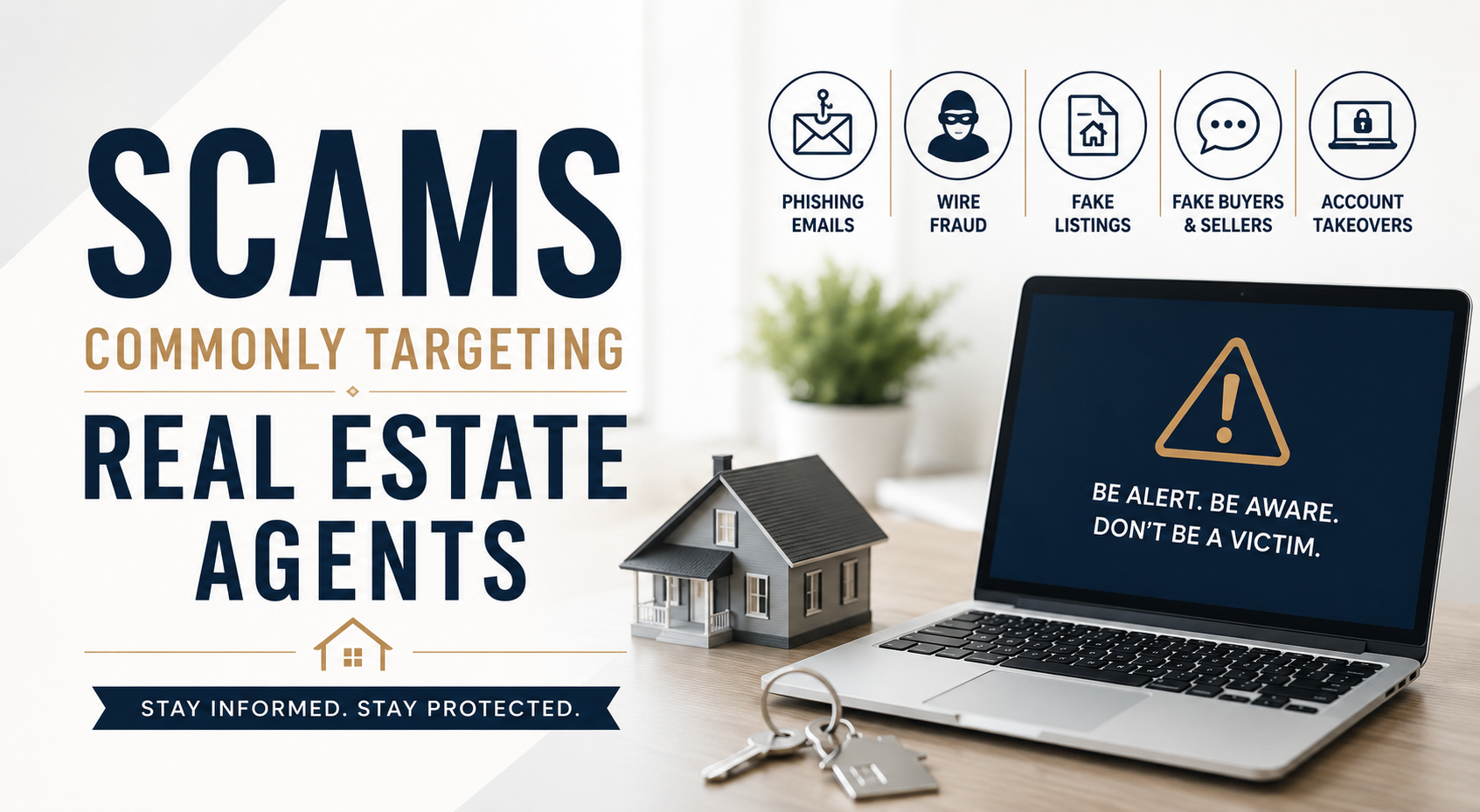
In light of the recent Zoom/Google Meet scam alerts, I also wanted to share several other common scams currently targeting real estate agents and brokerages.
1. Fake Buyer & Fake Seller Scams
Scammers pose as eager buyers or absentee property owners wanting to move quickly — often with cash offers and little negotiation.
They frequently avoid in-person meetings and prefer to communicate only through email or text.
Common Red Flags
- Out-of-state or overseas clients
- Refusal to video chat or verify identity
- Requests to move unusually fast
- Poorly written or scripted emails
- Fake IDs or forged documents
2. Vacant Land Listing Scams
This is one of the fastest-growing scams in real estate today.
Scammers impersonate the owners of vacant land and attempt to list and sell the property before anyone notices. Since there’s no occupied home involved, these scams can be harder to detect.
Best Practices
- Verify ownership carefully
- Call owners using public record information
- Request notarized identification
- Be cautious with sellers insisting on email-only communication
3. Wire Fraud & Closing Instruction Scams
Hackers may monitor email conversations and send fake wiring instructions shortly before closing.
These scams can result in devastating financial losses.
Red Flags
- “Updated” wiring instructions
- Last-minute changes
- Slightly altered email domains
- Pressure to wire funds immediately
Always Remember
- Verify wire instructions by phone using a trusted number
- Never trust wiring changes sent only by email
4. QR Code Scams
Scammers place fake QR codes on signs, flyers, open house materials, or public spaces that redirect agents or consumers to phishing websites.
Always verify where a QR code leads before entering credentials or personal information.
5. Check Overpayment Scams
A scammer sends a check for more than the agreed amount and asks the agent to refund the difference or pay a third party.
Later, the original check bounces.
Important Reminder
Never send money back from unverified funds.
6. Social Media & Account Takeover Scams
Agents are prime targets because social media and email accounts contain valuable client information and marketing reach.
Scammers may:
- Send fake Facebook or Instagram warnings
- Claim your page violated policies
- Ask you to “log in to verify” your account
Protect Yourself
Never click login links from messages or DMs.
7. Fake Tech Support Calls
Scammers may pretend to be from:
- Microsoft
- DocuSign
- Zillow
- Your email provider
They often claim your account has been compromised.
They May Ask For
- Remote access to your computer
- Software installation
- Passwords or verification codes
Legitimate companies do not request this unexpectedly.
8. Rental Listing Scams
Scammers steal listing photos and repost properties for rent, collecting deposits from unsuspecting tenants.
Unfortunately, consumers sometimes believe the legitimate listing agent is involved.
9. Open House Theft
Some criminals use open houses to scout homes or distract agents while accomplices steal valuables such as:
- Jewelry
- Medications
- Purses
- Firearms
Open House Safety Tips
- Lock personal belongings away
- Keep groups together when possible
- Watch for people separating from tours
10. AI Voice & Deepfake Scams
Artificial intelligence is making scams even more convincing.
Scammers can now imitate voices and create realistic fake video calls.
Always verify unusual requests involving:
- Money
- Wiring instructions
- Passwords
- Gift cards
- Urgent account access
A quick phone call to a known number can prevent major damage.
General Safety Reminders for Agents
✅ Use two-factor authentication on all business accounts
✅ Verify identities before sharing sensitive information
✅ Be cautious with links, attachments, and QR codes
✅ Double-check email addresses carefully
✅ Slow down when something feels rushed or unusual
✅ Trust your instincts
Final Thoughts
Scammers continue to evolve, and real estate professionals remain a high-value target because of the information and transactions we manage daily.
If you ever receive suspicious communication or encounter something that feels off, stop and contact Nick or me! It’s always better to ask questions than risk compromising your accounts, devices, or clients.





Recent Comments