


What Every Agent Needs to Know About Paragraph 11
With the recent storms across our area, many clients are dealing with unexpected property damage—some in the middle of a transaction. In moments like this, our role as agents becomes even more important.
Understanding Paragraph 11: Insurance/Casualty Loss in our Residential Real Estate Sale Contract allows us to confidently guide both buyers and sellers through stressful and often emotional situations.
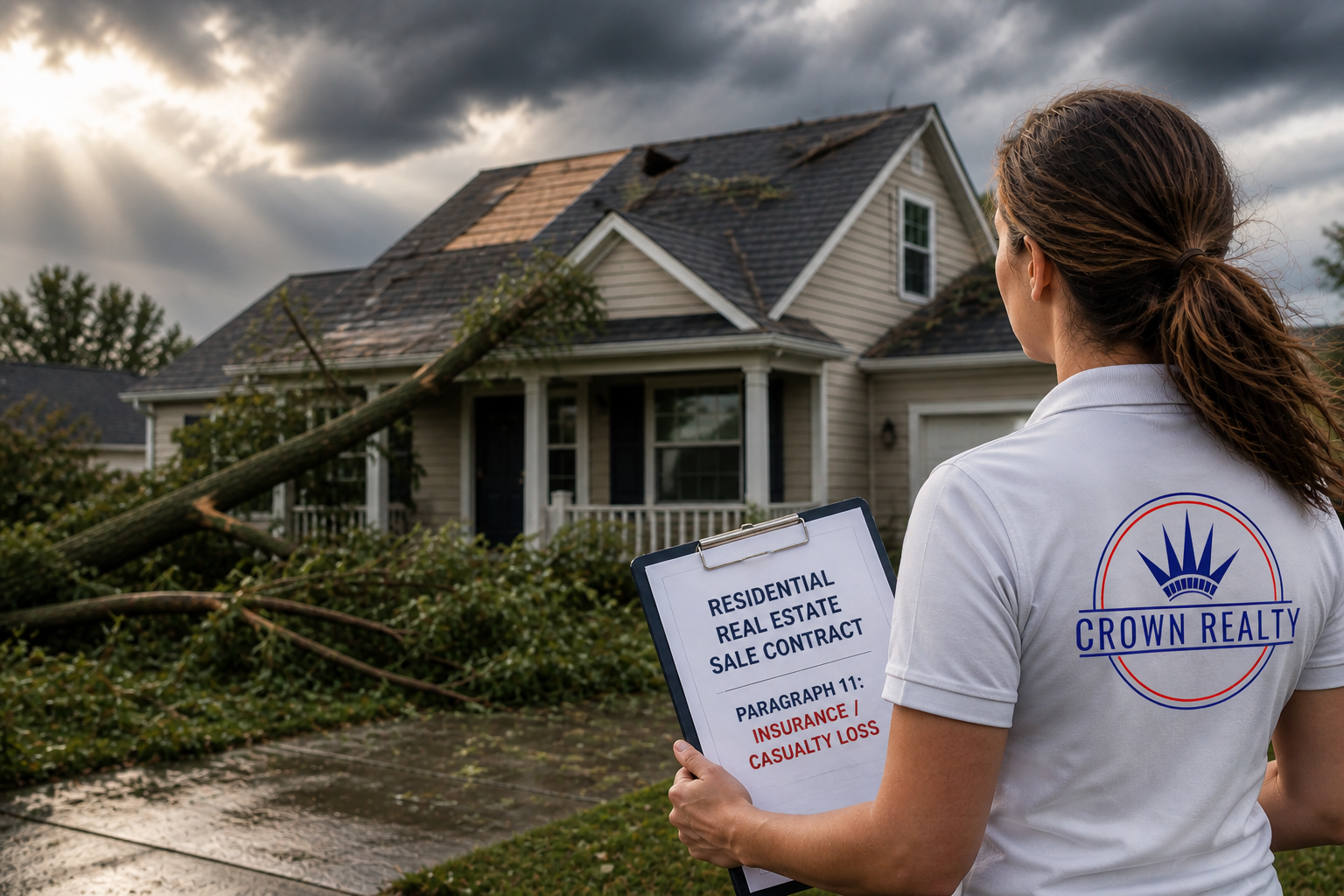
The Seller’s Responsibility Comes First
Paragraph 11 is clear: the seller must keep the property insured until the deed is delivered to the buyer .
If damage occurs before closing, the seller’s insurance is the primary coverage. Just as important, the seller is required to:
➡️ Notify the buyer in writing within one day of discovering the damage
As agents, this is where we step in early. After major storms, don’t wait—reach out to your clients and confirm the condition of the property.
What Counts as “Minor” Damage?
The contract separates minor damage from more serious loss.
If damage is considered minor, the seller can repair or replace it—ideally before closing .
If repairs can’t be completed in time, the parties can negotiate one of these options:
- Seller completes repairs after closing
- Closing is extended
- Funds (typically 1.5x the repair estimate) are escrowed until work is finished
This is where your guidance matters most—helping both sides find a solution that keeps the deal intact while protecting everyone involved.
When the Damage Is Significant
If the damage is not minor—or the seller chooses not to repair—the buyer has a decision to make.
Within 10 days of receiving notice, the buyer can:
- Proceed with the contract, or
- Cancel the contract
If the buyer chooses to move forward:
- The price does not automatically change
- The home is sold in its current condition
- The seller must provide the insurance assessment
- The seller pays the deductible
- Insurance proceeds are assigned to the buyer at closing
These moments can feel overwhelming for clients. This is where steady leadership makes all the difference.
Practical Tips for Crown Realty Agents
Be proactive
After storms, check in on every pending transaction. Don’t assume everything is fine.
Encourage documentation
Photos, insurance reports, and written notices are essential.
Stay in your lane—but lead well
You’re not the insurance adjuster, but you are the contract expert.
Ask for help when needed
These situations can get complex quickly—don’t hesitate to reach out.
Final Thought
Storms are unpredictable—but our professionalism shouldn’t be.
When you understand Paragraph 11, you bring clarity, confidence, and calm to your clients when they need it most.
This is where great agents stand out.






Recent Comments